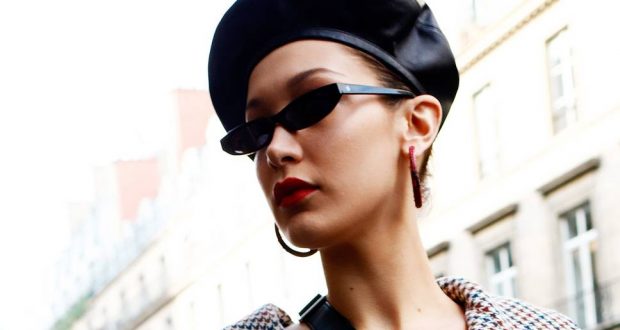
WALLIS SIMPSON
Wallis Simpson // The 1930s Fashion Icon
While I was watching “Rebecca” the new film on Netflix based on Daphne’ Du Maurier’s Novel from 1938,
I could not resist the comparison between the film style and the 1930s fashion icon Wallis Simpson, Duchess of Windsor.
Wallis was an American socialite and wife of the Duke of Windsor, the former British king Edward VIII.
His reign was the shortest in the history of the British Monarchy. His abdication in 1936 was due to his proposal to marry twice divorced Wallis Simpson. Such a marriage would have conflicted with the Monarch’s role as head of the Church of England. Edward and Simpson moved to France. Essentially, however, they were exiled: they could not return home without the permission of his brother, the new King George VI.
She is Most famously known as the catalyst for the abdication of Edward VIII in 1936, her eventful life has been explored and analyzed over and over again in popular culture; most recently in Netflix series The Crown.
She had an effortless chic style and she was known for her elegant taste in fashion and the fashion world is still obsessed by that woman and her fashion influence hasn't diminished. In more recent times, designers from Roland Mouret to John Galliano have paid tribute to her with collections inspired by her distinctive sharp glamour. Simpson created her signature glamorous look and use them wisely as a weapon.
Despite openly declaring that she felt she was “not a beautiful woman” and in fact found herself “nothing to look at”, she chose style rather than words to ensure that she was well-received among the ever changing social circles she propelled herself into.
Simpson was regularly spotted at the fashion shows of the mid 20th century; sitting on the front row at Elsa Schiaparelli, and remaining a loyal customer to both Christian Dior and American designer Main Rousseau Bocher, who created the dress she wore for her wedding to Edward.
She also wore Elsa Schiaparelli’s “Lobster Dress” in Vouge, 1937.
For more Photos View the slideshows //


IT’S APERITIVO HOUR SOMEWHERE
Aperitivo in Italy and especially in Rome is a Ritual, but more than that It’s a way of life.
So don’t miss the art of Aperitivo on your next trip to Rome 🥂
If you are not Italian you probably call it “HAPPY HOUR” but be sure that no Italian is listening to you when you compare it to another culture.
Aperitivo is much more than that!
Nothing compares to this magic hour At dust!
Imagine yourself sitting at one of the coolest bars, Rooftops, Hotels, piazzas and everything around you stops. There is a kind of magic in the air. Soon You will notice that no one does it like the Italians.
The origins of this Culture are rooted in northern italy ( Torino) back at the 18th century, but it evolved and spread all over Italy and becomes part of the “ Dolce Vita “.
Aperitivo comes from the word “Aprire “ in Italian which means “ To Open”.
It is a pre meal drink taking place before dinner 6:00 / 9:00 and intended to whet the Apetite.
Usually you will drink a cocktail or a bitter drink with a Vermouth or Prosecco ( White wine semi-sparkling style ) .
It’s not common to order a glass of wine for Aperitivo. Wine is for dinner Time.
So if you will have the chance to visit Rome or any other italian city soon., join the Italian way of life even for few hours.
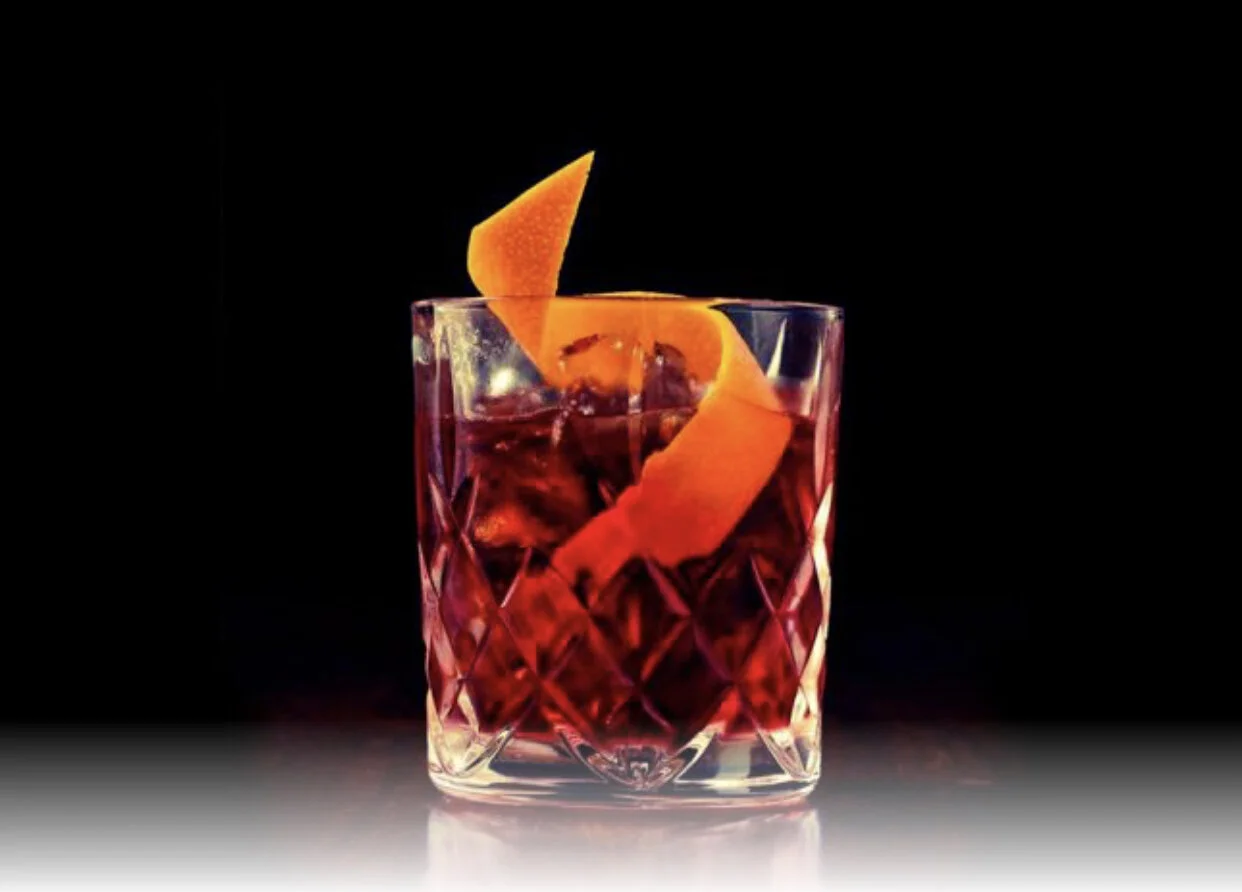
Take a pause and sit at the next bar or in a Cool Rooftop and order NEGRONI SBAGLIATO.
Till then you can have one at home !
Hotel Vilon Recipe by Samuele Florio 🍹
Ingredients
1/3 sweet vermouth
1/3 Campari
1/3 Prosecco or other sparkling wine
Served up: Add vermouth and Campari to a mixing glass filled with ice. Stir to combine and chill. Strain into Champagne flute. Top with prosecco and stir again.
Served on the rocks: Fill an old-fashioned glass with ice. Add vermouth and Campari and stir. Top with Prosecco and stir again. Garnish with an orange slice.
SALUTE!!!!

RESPONSIBLE TRAVELLER
At the last decade I realized that I have to ask a lot of questions about my habits in general but also about my travel responsibilities as a tourist wherever I am.
There are new challenges which I found not easy to solve but I am still at the learning position.
I know that the last thing most of the people are thinking about while they are planning their next photogenic vacation is climate change and its affects, , Yet I am trying to do small things which can make a big difference.
I am trying to be A Responsible Traveller from the level of planning my vacation. It is the again a question of VALUES. How I am going to travel with an added value such as minimizing negative impacts on the economy, environment and society or respecting local people and their customs. I found that I am already doing somethings which can be considered as eco friendly such as minimize waste or walking when possible instead of using my car.
Here are My best responsible travel tips :
Try to eat local food, it is fresh and benefits the locals.
2. Minimize waste.
3. Do not participate at wildlife activities.
4. Shop locally.
5. Say no to plastic.
6. Travel by public transportation as much as possible.
7. Walk everywhere.
8. Reduce or stop eating meat.
9. Go to museums instead of going shopping.
10. Have Fun!

MAISON ARTC
@maisonartc is a fashion label founded by Artsi Ifrach, an Israeli - Moroccan designer. #artsiifrach is using #upcycling to make one of a kind garments. @maisonartc is paying homage to traditional values and being very respectful to the designer’s background.
The label is eco friendly throughout the whole creative process.
“I’ve only lived here for eight years but I believe that my DNA as a designer is Moroccan,” he says. “When you see and feel my pieces, you know that someone actually made them, not a machine. Before fashion was called fashion, we called it culture – it came from the people, how they dressed, their uniforms, their needs, their style. And that spirit is still visible on the streets in Marrakech. It’s still a world that functions in an old time, you feel the culture is living in the street, it’s still raw, human, artisan. This drama, it inspires me every day.”
Artsi Ifrach
This coming weekend at @10corsocomo @cameramoda #mfw

#coronavirus affects Fashion Industry
Will the #coronavirus bring some sanity to Fashion Industry ?
While the world is facing another global emergency crisis it is clear that #fashionindustry which rely on China’s production and consumption power will be affected by the spreading of #coronavirus, the results are yet to come.
The most effecting industries are tourism and fashion. The Chinese are enormous power in these two industries and since they are locked behind bars, the global market feels it.
It is true that Most factories are closed in China anyway on this period of Chinese New Year, but as we see now it seems that the factories will not start their production on time and it will have a crucial impact on the global fashion production process, especially the businesses that rely just on the Chinese manufacturers.
On the other hand, the Chinese consumers are not buying luxury as they use to buy especially on this period of the year. The luxury brands start to feel the decreased sales.
We hope that the #coronavirus will be controlled as soon as possible. Once it is already here, I will suggest to think about other aspects like the opportunity of being more conscious about our fashion choices.
It will give us a chance to take a pausa from buying Chinese stuff on internet, stuff that we do not really need, but we are still buying because it is very cheap, A pausa from buying clothes that we do not know nothing about their production process or about the workers conditions and wages.
Let’s Rethink about all of these issues till we sit again in front of our computers and order Online #madeinchina products / clothes at the post #coronavirus period.
.

The future of FASHION week
THE FUTURE OF FASHION WEEK
The more we know about the environmental and social impacts of fashion industry, the more We understand that fashion industry has to change the way business is done also when it concerns FASHION WEEKS.
The Swedish Fashion Council announced last summer about the cancellation of its annual fashion week due to sustainability concerns. London Fashion Week was called to cancel the shows last February by civil group Extinction Rebellion and CECILE THORSMARK CEO OF COPENHAGEN FASHION WEEK said yesterday at the opening of Copenhagen Fashion Week that “All industry players including fashion weeks have to be accounable for their actions….” Is it a sign of change?
While yesterday , 28th January 2020, at a press conference just before the official opening show of Copenhagen Fashion Week, Torsmark unveiled the action plan 2020-2022 designed to reinforce the event’s sustainability profile and more importantly, to push the industry to accelerate its sustainability efforts.
It seems that fashion weeks are becoming irrelevant for such a long time in their traditional format. It definitely has to change especially in such crucial time as humanity is facing at the last decade.
We need to use the gathering of so many powerful people from the industry who visit fashion weeks, in order to create a platform of change. It has to be the place of Rethinking about the future of fashion and about reshaping the way we act on our planet.
Sustainable changes are crucial for the development of the industry in any aspect so as for fashion weeks and their purpose.
From the event production process till new standards for fashion week participation, things can no longer be the same. With more than 50 fashion weeks a year and with over 600 shows during main fashion weeks, endless collections, fashion week need to be reformed not cancelled.
The italian vogue editor Franca Sozzani said once that fashion is the closest mirror of the Zeitgeist but we need to remember also that the industry plays an important role in creating the societal and cultural environment of this Zeitgeist. The celebration of new collections at fashion weeks has to become something greater. We need to celebrate the art of fashion and creativity. We can not end the joy of fashion.
Along with that, We have the obligation to check ourselves all the time and to adapt different ways of creativity in order to make the right decisions for a better future for the industry and for everyone on this planet.


The CEO Global Fashion Agenda 2020 will launch this week during the @worldeconomicforum in Davos, Switzerland 🇨🇭 The CEO agenda spells out the eight most crucial sustainability priorities, offering clear guidance on where to focus the fashion industry’s efforts and highlighting climate change as a new core priority.
THE EIGHT SUSTAINABLITY PRIORITIES FOR THE FASHION INDUSTRY:
1. SUPPLY CHAIN
TRACEABILITY.
2. COMBATING
CLIMATE
CHANGE.
3. EFFICIENT USE OF
WATER, ENERGY
AND CHEMICALS.
4. RESPECTFUL AND
SECURE WORK ENVIRONMENT.
5. SUSTAINABLE
MATERIAL MIX
6. CIRCULAR FASHION
SYSTEM.
7. PROMOTION OF
BETTER WAGE
SYSTEMS.
8. FOURTH
INDUSTRIAL
REVOLUTION.

THE PREOWNED BOOM
When I first read the book “The Paradox of Choice” by Barry Schwartz I realized that the fashion detox that we are facing now is crucial in order to reduce the number of options. Schwartz argues that eliminating consumer choices can reduce anxiety for shoppers. It will make them happier than before. It does not mean that we are loosing our option to choose because the Autonomy of Choice is critical for our well being.
The point is, especially in the digital age, that happiness is affected by success or failure of goal achievement. We live in an era of hyper consumerism and we are facing in many aspects “tyranny of too many options” as Benjamin Voyer, a behavioural scientist and professor at the Europe Business School in Paris, says. Too many options lead the consumer to struggle to make a decision and leave him always less satisfied.
So maybe the fact that the resale market is growing faster than the traditional retail market is part of detoxing our options and the “end of ownership” era is part of our will to have less.
From one hand, people are selling their goods, especially at the luxury market, and on the other hand, we have alternatives like borrowing vs buying. We are going to buy less.
The younger generations, Millennials and Gen Z, are leading the change. They are buying less and they prefer the second hand market because of their awareness to the fashion Industry’s impact on climate change.
They need to fix what we destroyed till now.
This is the era which “Selling is the new Buying”, says Voyer, Selling is a social activity and it helps the circular economy to reduce waste. It offers a new experience of shopping on our way to our fashion detox. I hope it will lead us to a much happier life and less anxiety as we are facing now in this digital and hyper consumerism era.
problem of our consumer habits was

ORANGE FIBER BRAND
When we discuss about sustainability in fashion, Fabrics and their origins are the main part of the discussion. As we know The production process starts with a fabric and the other thing that we already know is that there are so many environmental and ethical impacts on the planet in every step of the production process. Most of the fabrics today are not environmentally and ethically friendly. The best example is cotton but also Synthetics as Polyester, Nylon and Acrylic or leather, fur and wool.
Technology and Innovation are trying to find alternatives and solutions but there is still a lot of work to do. One example for an alternative fabric made of citrus juice which I find so cool is @orangefiberbrand
Orange Fiber is an Italian company made up of equal parts innovation. They create exquisite sustainable fabrics from citrus juice by-products that would otherwise be thrown away, representing hundreds of thousands of tons of precious resources. They give a new life for these materials, transforming them into refined, ethereal fabrics perfectly suited to Italian tradition and style

END OF OWNERSHIP
We know already that we are living in a critic time of global changes. Everything is going to be totally different from the old world, the one that we left at the last decade. I found it very exciting, but at the same time also challenging.
Technology developments and climate changes are the two big challenges of the new decade.
The complicated situation of humanity is forcing us to change our habits and our mindset. To behave differently. In terms of the fashion world we need to change the way we consume because it is no longer relevant to live like we did before.
Therefore Our relationship with our clothing is shifting to a new model which is a result of a combination in which we still have the desire for a variety but at the same time we want to be more sustainable. We care about our planet.
It is mostly the young generation desire. they want to live differently, they are asking questions that we did not ask for a long time about the production chain and about the environmental and social affects of the fashion industry. They are leading the change.
In that case, We must shift away from traditional ownership to other ways to access products. Our fashion products must last longer so if we still want to have more clothes and we do care about planet earth we must have other options than buying new stuff and own them.
The resale market which is growing so fast gives us options that we didn’t have before. We are rethinking about our relationship with fashion products, just like in other fields. For example, music , we do not buy CD’s we rent music from Spotify. We do not have video stores, we have Netflix. We are changing our consumer behavior in all the aspects of our life, so as in our fashion choices.
Rental and Resale models prolong the product lifecycle. The new models are giving a wider audience the option to have an access to the luxury market, It leads to a circular economy and also minimize the waste, so why not?
We see a remarkable growth in resale businesses and as a result our wardrobe will change its proportion. We will see more pre owned and rented garments especially from the luxury section and less new stuff in our closet. We will need to ask ourselves about our priorities of own versus rent. Not just us as consumers, All the big players will have to ask themselves the same questions if they want to be part of this changing world. They have no other choice. It is not an option anymore.

CLOSE THE LOOP
The fashion industry was built as a linear model system. It means TAKE/ MAKE/ WASTE.
We all know that it has to change totally because of the extreme impacts on earth and on human beings.
According to Ellen Macarthur Foundation Textile production emits 1.2 billion tonnes of green house gases, half a million tonnes of plastic microfibres released from textile washing ends up polluting our oceans and one garbage truck of clothing is landfilled every second. The Linear Model will soon reach its physical limits. Circularity is a necessary solution to minimize the use of resources. Innovation and Technology can help to move into a circular fashion system. We need to focus in every step of the chain production. We need to think how a product will be made, used and ends.
The journey of garments will change. Our relationship with garments will change. we have no other choice.
Dana Thomas, author of “Fashionopolis” thinks that the future of fashion is zero waste. it will be an industrial revolution in every aspect of our life. The opportunity to shift from TAKE / MAKE/ WASTE model to a circular economy principles business models increase the use of clothes, will make clothes from renewable materials and old clothes will be used to make new ones.
This attitude contrasts sharply with the current linear system, in which resources are turned into products that are destroyed at the end of their lives.
The circular economy maximizes the use of products and resources, while minimizing value destruction. In other words, the goal is to retain the value of everything that is valuable and let nothing go to waste.
By designing our waste, keeping materials in use and regenerating natural systems, We are changing the game. The result is the growing market of second hand clothing. We see that clothing rental and resale are surging in popularity.
According to Business of Fashion, the second hand market will grow faster than any other sector in fashion and will reach $15 billion by 2023.
It is clear that Circular Economy offers benefits to society and environment.
The new model last longer, will worn more and will be rented, recycled or resold.
WE NEED TO CLOSE THE LOOP!!!


ECO MINDED MAGAZINE
Imagine a Fashion Magazine without photo shoots, models, stylists, hairdressers, without photographers or makeup artists….. The Italian Vogue January issue is exactly that!!!
“NO PHOTO SHOOT PRODUCTION WAS REQUIRED IN THE MAKING OF THIS ISSUE” said Mr. Emanuele Farneti, the editor in chief, about the declaration of being an environmentally friendly magazine. No doubt that the Italian Vogue is making a statement concerning the climate crisis that the world is facing at the last decade.
As a former Stylist and from my experience we must understand that in every production of a Magazine like Vogue there are many people involved, transportation, deliveries, catering, plastic, electricity and etc. We are aware for their environmentally affects. Vogue Italia Made a green statement and a refreshing step in the digital age we live in, which suffers from overdose of photography.
What we will find on this Issue? Eight different covers, photos replaced with illustrations of well known art icons and emerging talents, all the models wearing GUCCI. It will be a drawing issue covers. showing clothes without photographing them.
In terms of reducing the carbon footprints of magazines making, it is a step forward and a good beginning of a new decade and more responsible industry. Nevertheless the magazine will use 100% recycled plastic wrapping and all the money saved from skipping photo shoots will be donated to the restoration of the cultural center and library in Venice that was damaged by the floods last year.
January 2020 Vogue Italia Issue on newsstands January 7th.


SUSTAINABLE THINKING EXHIBITION
The Sustainable Thinking Exhibition at #museoSalvatoreFerragamo offers fascinating insights into founder Salvatore Ferragamo’s innovative works and research on natural and recycled materials and features some of the most recent experiments carried out in the field of sustainable design.
The aim of the Sustainable Thinking project is to make people reflect on the themes of circular economy and responsible living through visions of art and fashion.
#museosalvatoreferragamo until March 2020.


INNOVATION RESPONSIBLE FASHION
Innovation for Responsible fashion is crucial. Technology and innovation have become a major factor and important part of the fashion industry’s challenges at the moment. In order to minimize the social and the ecological impacts at the production process of a garment, innovation helps us by creating new sustainable opportunities. The fashion players can reach their new sustainability goals much easier and much faster.
Meet @danitpeleg3d.
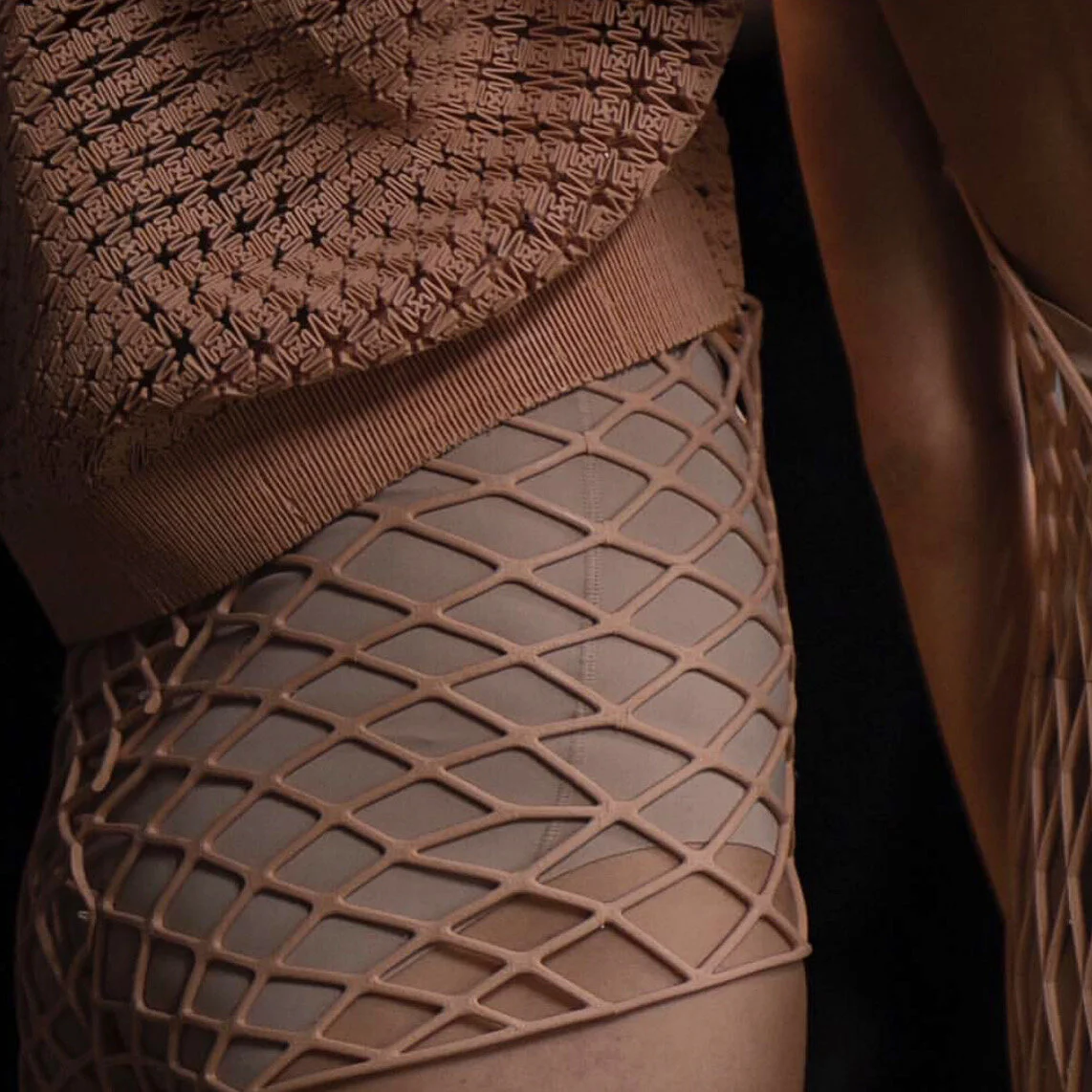
Danit is an Israeli Fashion Designer. In 2015, for her graduate collection at fashion school, Danit was the first to design and 3D print an entire ready-to-wear fashion collection – printed entirely at home.
Unlike traditional production, the process of 3D printing produces zero waste and no extra materials.

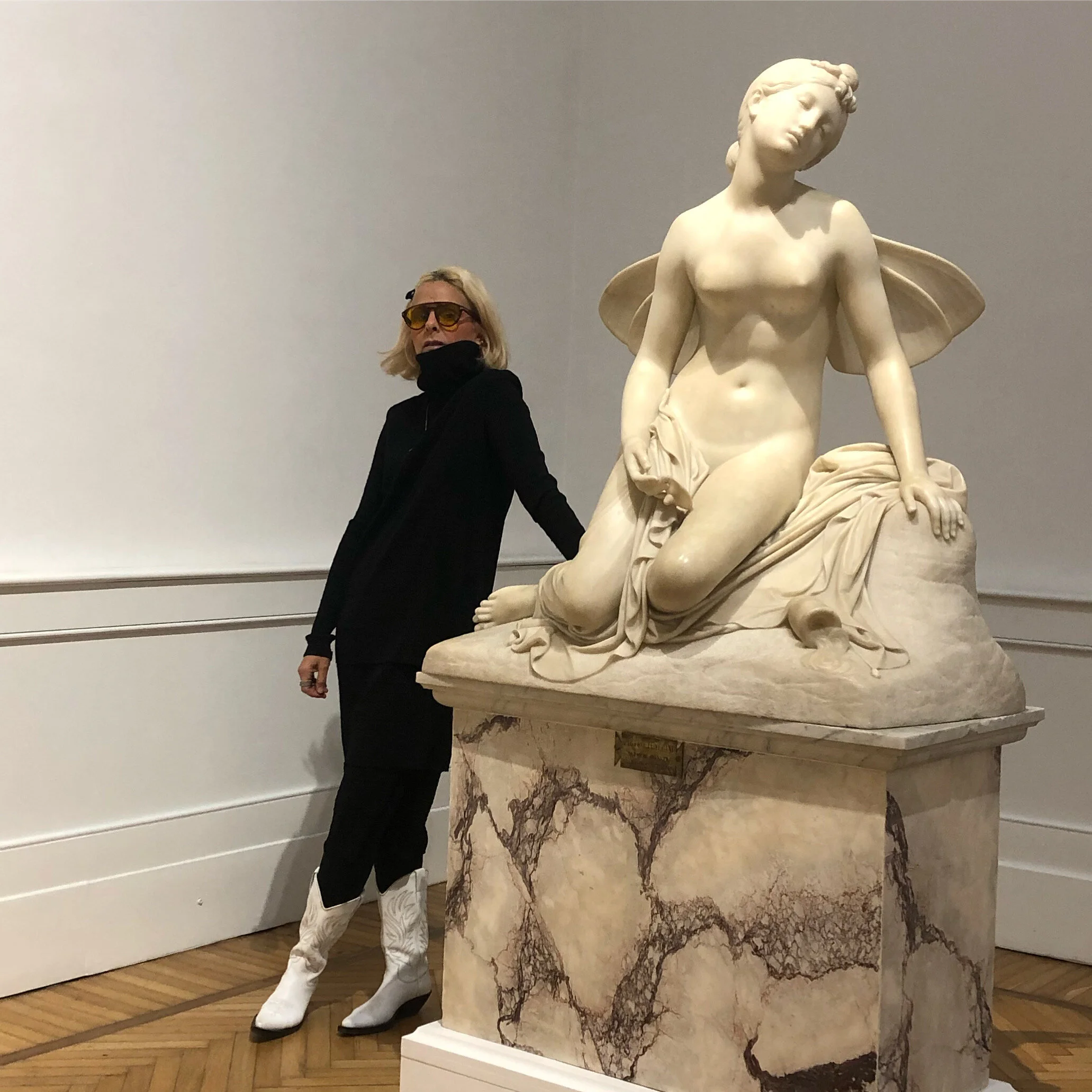
THE FOURTH INDUSTRIAL REVOLUTION
ההתעסקות בשאלת מקומו של האדם בעולם אינה חדשה. שאלות כדוגמת אלו קיימות כבר בתנ״ך, ועסקו בעיקר במקומו של האדם בעולם אל מול האל. פילוסופים ביוון העתיקה גם כן התחבטו בשאלות מסוג זה, שהרי הפילוסופיה החלה עוד שם. אם נרחיק מהעולם המערבי, בודהיזם הוא שחקן מרכזי בעולמות העוסקים בנפש האדם.
איך כל זה קשור לעולם האופנה ולמציאות שבה אנו חיים היום וזו שעדיין מחכה לנו?
אנחנו חיים היום בעידן מהפכני, או כמו שמומחים מגדירים, אנחנו בראשיתה של המהפכה התעשייתית הרביעית. המין האנושי עבר שלוש מהפכות תעשייתיות בעבר מאז המאה ה 18, מהפכות ששינו את כללי המשחק והביאו לפתחינו אתגרים רבים כגון : המצאת חשמל, מכניזם, המצאת המפעלים והייצור ההמוני וכמובן המהפכה הדיגיטלית שהחלה מאז שנות השישים של המאה שעברה, הלא היא המהפכה השלישית.
המהפכה שאנו חווים היום, הרביעית במספר היא סוג של המשך למהפכה הדיגיטלית אך חזקה ומהירה הרבה יותר.
כפי שהגדיר אותה בספרו Klaus Schwab המהפכה תטשטש את הקווים בין הדיגיטלי, הביולוגי והפיזי.
זהו עידן שבו האנושות תצטרך לקחת החלטות חשובות לגבי המשך קיומה. תצטרך לתקן את הנזקים של המהפכה השלישית ותעצב מחדש את הערכים החשובים לה כקהילה.
במהפכה הנוכחית נצטרך להחליט האם אנחנו משנים את הדרך בה אנו חושבים, עובדים וחיים. זהו ללא ספק פרק חדש בהתפתחות שלנו כבני אדם, פרק שבו נחליט האם אנו רותמים את הטכנולוגיה למען עתיד טוב יותר.
אנחנו נחליט האם הטכנולוגיה שניתנה לנו כדוגמת רשתות חברתיות תנוצל לטובת אינטראקציה בין בני אדם ותרבויות או האם נמשיך לתת לאותן רשתות להעמיק את הציפיות הבלתי ריאליות שלנו לגבי משמעותה של המילה ״הצלחה״, המוגדרת היום לפי מספר עוקבים ומספר לייקים וגורמת לתופעות של דיכאון וחרדה, הפוגעים בנפש האדם.
באותו הקשר נחליט מה יהיה עתידו של עולם האופנה. המשבר בעולם האופנה עמוק מאשר אנחנו מתארים. זהו משבר שמעמיד אותנו אל מול שאלות מוסריות, שאלות לגבי הרגלי הצריכה שלנו והמחיר האקולוגי והחברתי שלהם. גם כאן נצטרך להחליט. האם הערכים שלנו יכריעו או יהיה זה הטרנד הבא שיביא לקטסטרופה, שלא תהיה ממנה חזרה.
המין האנושי יצטרך להתעמת עם שאלות מוסריות קשות שאת חלקן יפתור באמצעים טכנולוגיים וימזער את נזקי התנהגותו. חישוב מסלול מחדש של כל השחקנים הפועלים בתעשיית האופנה, שיידרשו לשקיפות יתרה של צעדיהם.
הכל מסתכם בנו כבני אדם ובערכים. גבולות מוסריים ואתיים יוגדרו מחדש. האם נמכור לטכנולוגיה את נשמתנו או שמא נגרום לטכנולוגיה להיות חלק שמשלים את חיינו ומיטיב אותם

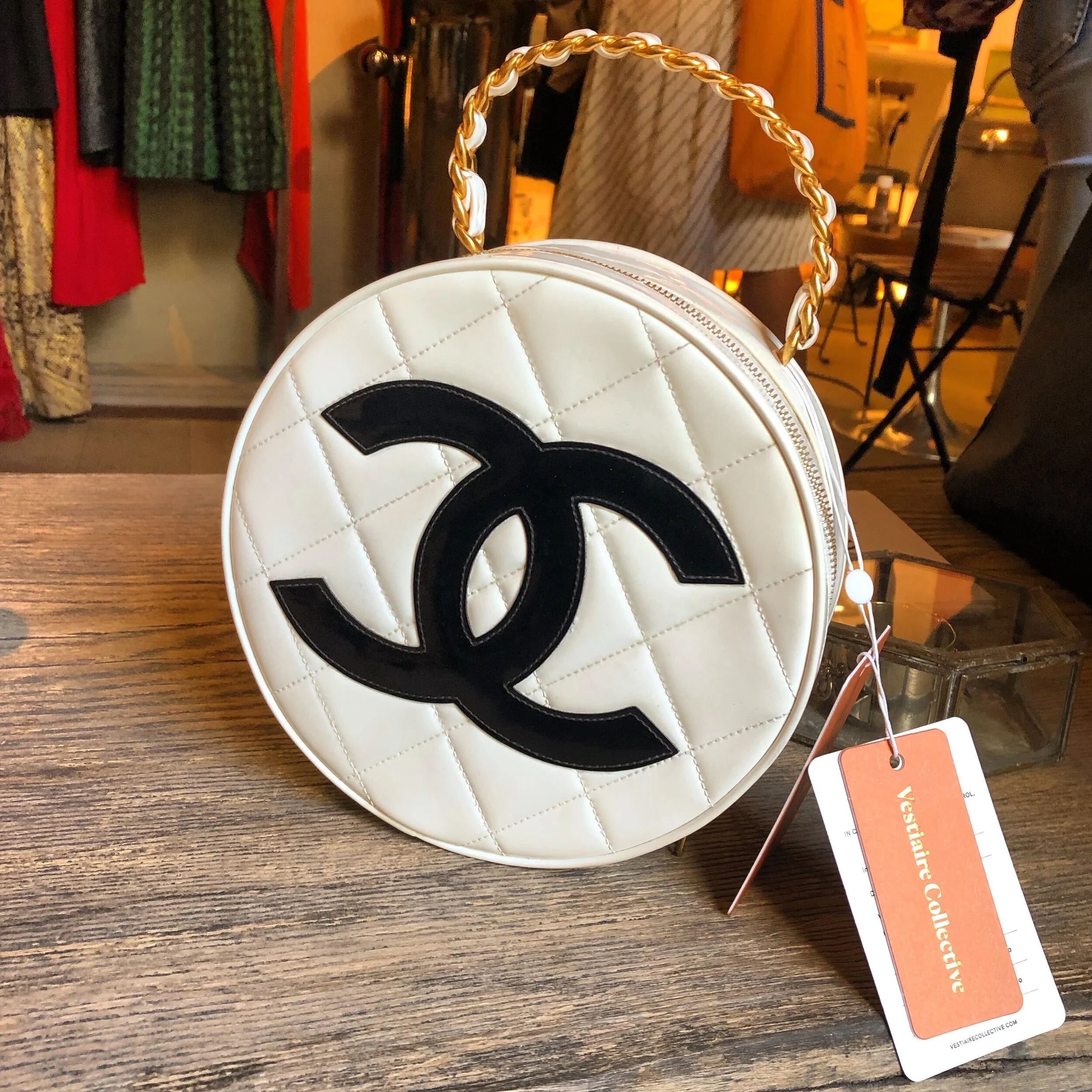
WHY SECOND HAND?
The most important thing for me as a consumer is keeping asking my self about how my purchase affects the environmental and social aspects of my life. I care about the life cycle of my garments and how I can invest in clothes that last longer and i am checking “who made my clothes?” those questions help me to choose well and to make my life more conscious.
No doubt that my focus today is on buying less and wearing what I already own over and over again rather than buying too much cheap disposable clothing. but if i choose to buy i will buy a second hand or a vintage, because this is one of the most ethical and sustainable ways to shop. it gives the clothes a new life in my wardrobe. The clothes have been already produced and it is a great way to stay unique in a world of copy paste Instagram accounts. A world which I found boring.
According to researches the fashion resale market is going to overtake fast fashion by 2028. Mass market or luxury, if people will find a high quality product and a unique garment they will choose to buy second hand. Especially the younger generation, the ones who fight for a better future and understand the effects of the fashion industry will adopt secondhand more than others.
There are so many options to shop second hand and vintage online today so there are no excuses of why not to do so. here are some useful websites:
https://us.vestiairecollective.com/
Since I live in Italy I found those second hand and vintage shops which i really love.
It can be useful for you for your next visit:
Rome // http://www.torretta71.com/
Milano // https://cavallienastri.com/ http://vintagedelirium.it/


TEXTILE WASTE
How much clothing do you throw every year?
what do you think happens to them? given to charity?
Yes, some are giving to charity, but do you know that even charities get more clothes than they can give to the needy?
There are countries that resold used clothes abroad as a second hand clothes, But developing countries are starting to ban the import of used clothes.
Most of the clothes go straight to the incinerator with no textile recycling ending up in landfill.
Textile waste is one of the big issues that fashion world has to deal with. The regulators, The designers and The fashion brands has to behave responsibly in order to find solutions In each level of the chain production process.
The consumers need also to be responsible for their choices.
We have lot of work to do in order to solve this issue as long as we want to save the planet and the people who live in.
At the rate we’re now consuming garments raced down the production lines, on to rails and into baskets and, soon enough, into landfill, it won’t get better.
We need a new textiles economy, based on circular economy principles, It would lead to better outcomes and will make the change that we are looking for.
It is urgent as we can understand and it will take time unfortunately till we will have the final solutions. Meanwhile There are some things that we, as consumers, can do immediately.
The first step to stop the madness is to buy less, to use second hand, to rent and to wear all that we already have in our closet, because the most sustainable item is the one we already own…
The second step is recycling. If you already have so many clothes and you feel that you want to get rid of them the best solution is Recycling.
It might take a little extra work but there is no other better way to take care of your old garments!
Some options on how to do it:
USE TEXTILE RECYCLING
DONATE YOUR OLD CLOTHES
TRY TO SELL THE CLOTHES TO A SECOND HAND STORE
CHECK IF THEY CAN BE COMPOSTED
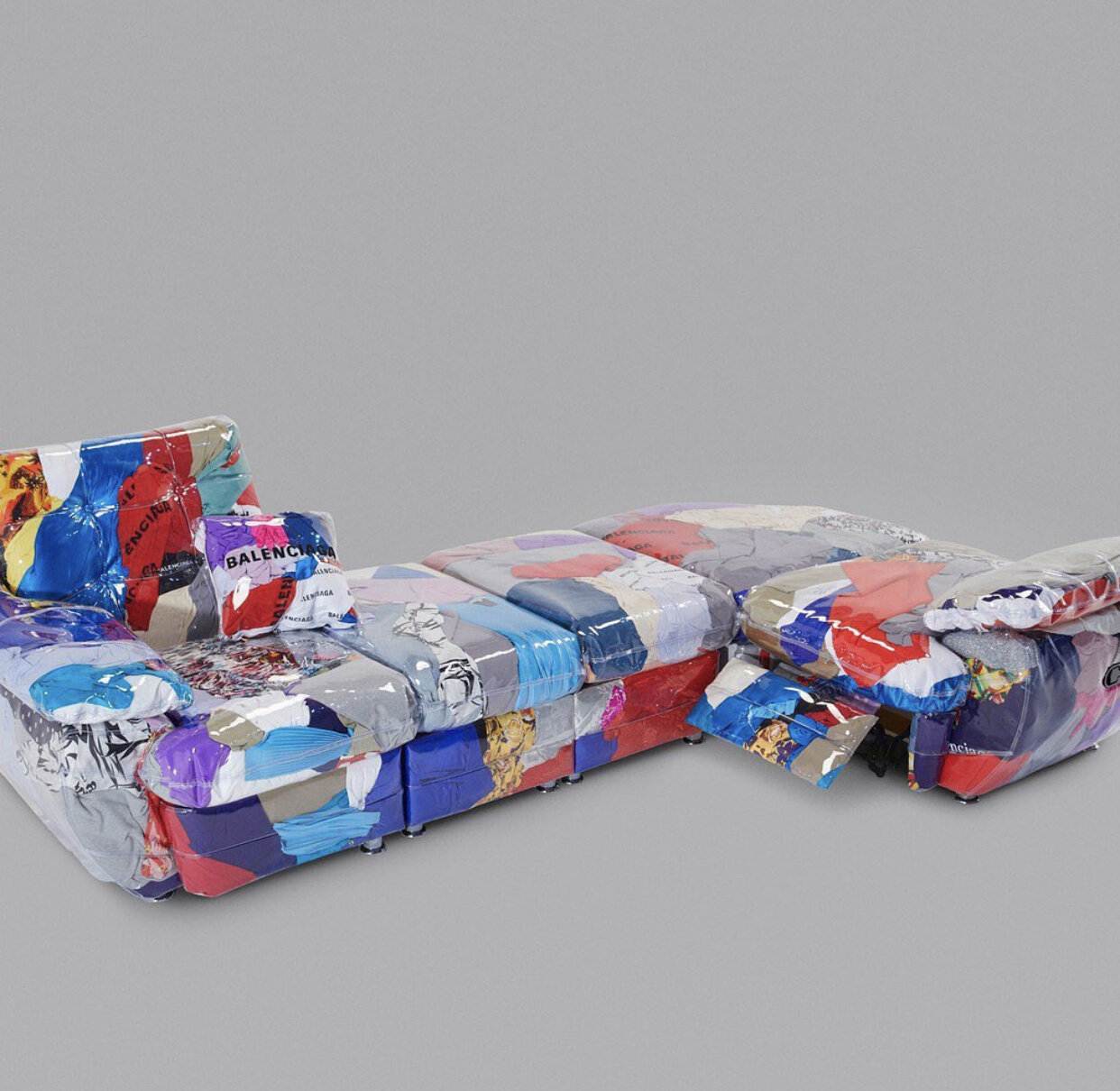
At the main picture you can see a @balenciaga couch stuffed with offcut textiles from their design room floor Thanks @rvmkibbs


BORN TO BUY?
I keep asking myself many times the question “why people buy things?” Is buying give us the greatest satisfaction? what is that human nature habit?
I have already learned three main things about consumer choices from my own experience:
When we shop we choose to buy things based on calculated decisions about what we think will make us happiest.
No matter how much we shop we will never be completely satisfied.
The amount of pleasure we get from each good decreases with the more we consume.
So it is clear that we do not buy for logical reasons, we buy for emotional reasons. We can change our consumer habits by taking the control back in our hands. We must think about the responsibility of our choices. We have got the power to choose. Ask where you get the power from? Is it from external sources? We all know that if the answer is yes, it won’t last long. It will help for a short time and you will realize that you spent money not from the right reasons. We should keep asking ourselves questions about our consumer habits and try to buy less, because this is not the meaning of being alive or feeling good for a long time.
while we choose to be responsible we choose to be sustainable.
Buy less. choose well. keep it last.

TAKE BACK BLACK FRIDAY
TAKE BACK BLACK FRIDAY
בלאק פריידי הוא כינוי ליום שישי שחל בין חג ההודיה לחג המולד, היום הפותח את עונת השופינג. זהו יום שיא של צריכה, המאופיין בהנחות ענק ומאפיין את התרבות בה אנו חיים. תרבות הסובלת מייצור עודף של מוצרי צריכה
אין ספק שהמסר המועבר מהצרכנים ליצרנים ולקמעונאים בימים אלו שגוי. הנהירה לחנויות או ההזמנות באתרי האון ליין והטרפת סביב הרכישה של המוצר הבא פוגעים בהתקדמות לקראת שינוי התפיסה התרבותית הגלובלית. נזקי הייצור, הבאים לידי ביטוי בפגיעה בכדור הארץ, בסביבה ובאוכלוסיית העולם מובילים להבנה כי השינוי הוא הכרחי.
המסר החשוב ביותר נוגע להבנה כי הכוח האמיתי נמצא בידינו, הצרכנים. ברגע שנשכיל להבין ולהשתמש בכוח הזה נוכל להביא לשינוי. הרי כולנו יודעים שהטירוף סביב הימים הללו אינו רציונלי, היות ואת רוב הפריטים שיש לנו בבית אנחנו לא ממש צריכים, אז על אחת כמה וכמה הפריטים שטרם נרכשו.
נסו לדחות סיפוקים, אתגרו את עצמכם ונסו להינות ממה שכבר שלכם.
פתחו את הארון ובדקו כמה מהפריטים לא לבשתם לאחרונה או בכלל. מרגישים שאתם ממש חייבים לרכוש? בקרו בחנות יד
שנייה הקרובה אליכם.
איך אני אבלה בשישי הקרוב ? קרוב לוודאי שאמצא את עצמי בחנות יד שנייה או שאבקר באחד מבתי הקפה ואהנה משמש אחרונה של
סתיו אחרי שיעור יוגה.
"The True Cost" :עשו לעצמכם טובה ותצפו בסרט הדוקומנטרי של נטפליקס
מבטיחה לכם שלא תישארו אדישים לנזקי תעשיית האופנה
והשרשרת הבלתי פוסקת של מנועי הייצור


CONSCIOUS CONSUMPTION
Conscious consumption is the idea that we should be spending our money on products and services that are not harmful to the planet and its ecosystems, which are increasingly under threat from destructive business practices.In fashion, conscious consumption includes ethical brands which produce clothing with cleaner materials and practices, as well as alternative shopping habits like second hand, pre owned items or rental services. we must pay attention to human rights and support those who respect their workers. do not forget to ask “who made my clothes?” before buying any new garment.
Buy less, Choose well, Make it last.

Sicilian Culinary Experience / Anna Tasca Lanza Cooking School
Sicilia was always on my top must visit wish list. Since I moved to Italy I was dreaming about a sicilian culinary experience and it has been a while since I started to do a research in order to find the best place for me. Anna Tasca Lanza looked as the ultimate place for my needs. it located at the rural part of sicily, it has an interesting history and offers an experience of “field to fork”. The school was founded by Anna Tasca Lanza at case Vecchie, a 19th century farm villa on the family’s Tasca d’Almerita wine estate.Since Anna passed away in 2010 her daughter, Fabrizia is managing the school and continues her mum’s dream.
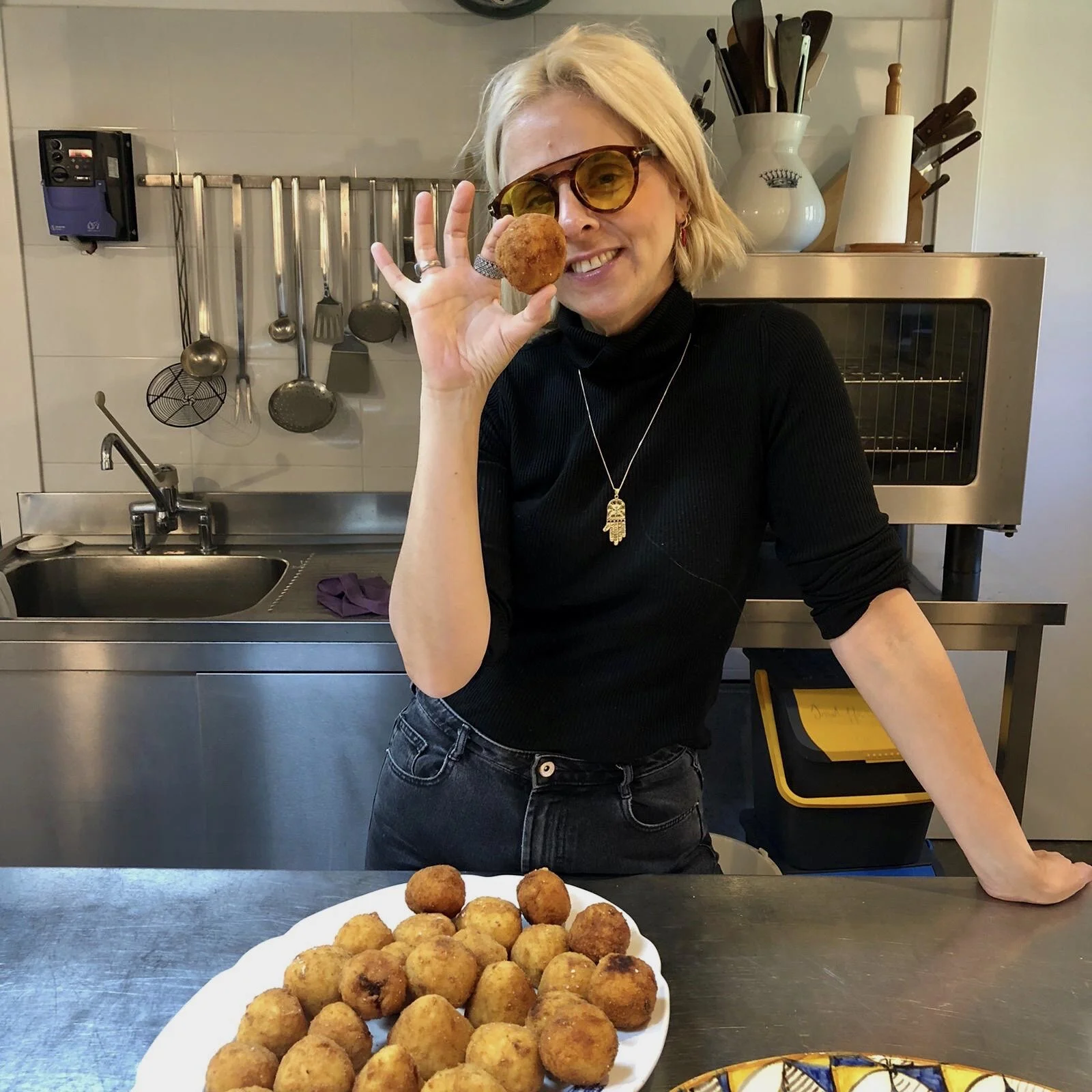
I was invited to the school by Fabrizia and spent there two nights. It was a joyful experience. I had the chance to feel the spirit of the place, to take part in a cooking class, to taste the wonderful wine from the Tasca winery and to visit the wonderful garden. We cooked arancini, a tipical sicilian rice balls stuffed with vegetables, tomato soup and a great eggplant salad.
the school offers cooking classes from one day to five nights stays, workshops, cook the farm and longer program of ten weeks, all based on the seasonal sicilian kitchen and tipical and traditional food.


ROME - 24 HOURS IN THE CAPITAL
Rome is one of the most incredible cities you will ever visit. Everywhere you go, remnants of the city’s great history surround you. There is an incredible amount of things to see, do and learn about in Rome, together with amazing food and cute vintage shops. But what do I recommend to try first if you are in Rome for 24 hours only?
TO SLEEP
HOTEL DE RUSSIE-Via del Babuino 9, Rome
The enduringly glamorous Hotel de Russie is a captivating mix of old and new, blending modern design with classical architecture. Located on Via Del Babuino, close to the Spanish Steps, the beautiful hotel has striking views over Piazza del Popolo in the center of Rome. From renowned artists and writers to world travellers, Hotel de Russie is the escape of choice for our distinguished guests. Discover its exclusive Secret Garden and al fresco restaurant, its serene spa and elegant rooms fit for royalty.


TO EAT
AVOCADO BAR -
VIA DELLA MADONNA DEI MONTI, 103 ROME
The first of its kind in Italy, the Avocado Bar is a truly unique and special place that accommodates all avocado lovers; it was opened last summer in the heart of Rione Monti, in Rome. The Avocado Bar has a true mission: to celebrate the characteristics of a unique and versatile ingredient, the avocado, and amazed me with the creative recipes of the Resident Chefs, all based, of course, on the popular tropical fruit. Among the toasts, try the tasty Rose paradise with pink hummus, ricotta flakes, lettuce, a rose created with avocado and chopped hazelnuts.

HOSTERIA DEL MERCATO 1870 -
BOCCA DI LEONE 46, ROME
It's kind of impossible to find somewhere good to eat near the Spanish Steps/via del Corso/Piazza del Popolo. Last week I discovered a solution in Hosteria Del Mercato 1870.
Hosteria del Mercato 1870 is on a pretty side street and the inside of this very stylish space holds a juice bar, an organic market filled with cheeses, produce, and a very interesting wine selection all sourced from small and local producers and a lush dining room.
The menu offers an endless deliscious food. you can find a gluten free and vegetarian dishes which are so good. I tried the gespaccio soup and Gorgonzola salad. Then I ate the baccala fish cooked with a lot of herbs and spices in tomatoes souce and drank a bottle of chardonnay. Everything was so tasty and I hardly could eat the tiramisu at the end.
The service and the atmosphere were also very welcoming and I'm going to visit this place again soon.


TO SEE
MAXXI MUSEUM - GUIDO RENI 4 A, ROME
AFRICAN METROPOLIS
IMAGINARY CITY
A detailed overview of the artistic and cultural scene of the African continent.
A major exhibition of the African continent: the project, realised in collaboration with the Ministry of Foreign Affairs and International Cooperation, and present the works of 34 artists reflecting on the on-going social and cultural transformations.
Through five chapters, the exhibition presents the complex structure of a metropolis in which the urban space is seen as a location for the coming together of diverse experiences in which tradition and contemporaneity dialogue.



YOU NEED A STRAW BAG EVEN IF YOU ARE NOT JANE BIRKIN
We owe it to style icon Jane Birkin for starting this trend in the 70'. No accessory defines her effortless style more than the iconic straw basket that bears her name. She carried it everywhere, slung over one arm: filled with green apples at a street market or stuffed with loose reading papers at the airport. Her basket bag actually inspired Jean Louis Damas former head of Herme's to create one of the label's biggest It bags' too: Herme's's Birkin bag.
Since last year we can see basket bags everywhere, but the micro trend that become huge is straw bags.They are definitely the summer's chicest accessory.
It doesn't matter if you plan a vacation in Greece, Bali or the French Riviera, or just hanging up with your friends for dinner or a bar. You are going to embrace one of those bags, even if you are not Jane Birkin!! They give your outfit the perfect total look for those hot days. and beyond this they became an Instagram hit!!! So, who doesn't want to look like a french girl?
Here are the versions i like the most:

R TO L : Miu Miu, Nannacay, Fendi, Felix Rey, Cult Gaia, Sophie Anderson, Serpui, Fendi, Prada, Miu Miu, Prada.
ALL BAGS AVAILABLE AT NET - A - PORTER

Jane Birkin, 1974.
PIC RIGHTS: WWW.VOGUE.COM

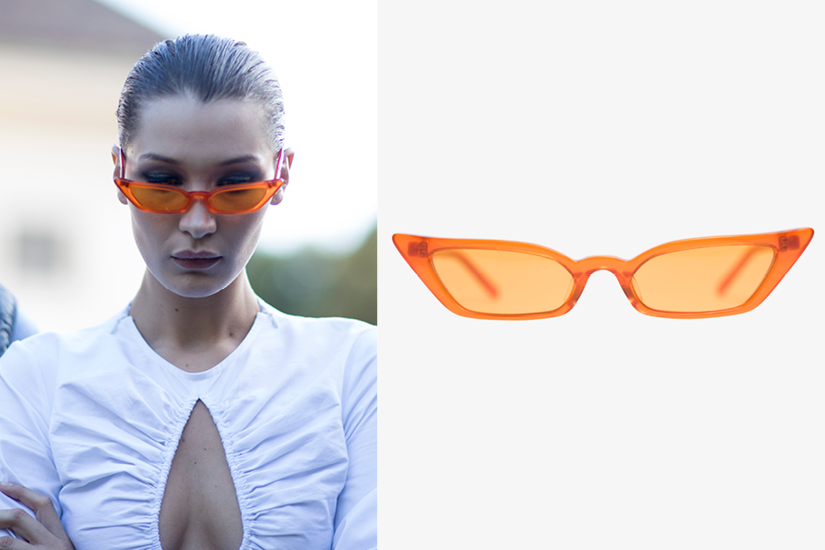
POPPY LISSIMAN - "LE SKINNY SUNGLASSES"
I'ts been a while that I have this obsession for the Australian accessories designer POPPY LISSIMAN. The moment I became aware of her Instagram account I realized that this is a name to remember.
Poppy specializes in narrow "Le Skinny" frames that match the tiny sunglasses trend which has been here for a couple of seasons.
No doubt that Bella Hadid made the brand so popular. she wore them so many times and helped them reach to so many people and thereby making them become on pre order status for a while.
So, If you want to upgrade your look or feel like you need an additional funky touch or spicy and eccentric chick you need a pair of those cool retro shades in fun colors or in an unusual shape.
I'm going to put them as my first choice of my summer's wish list!!!